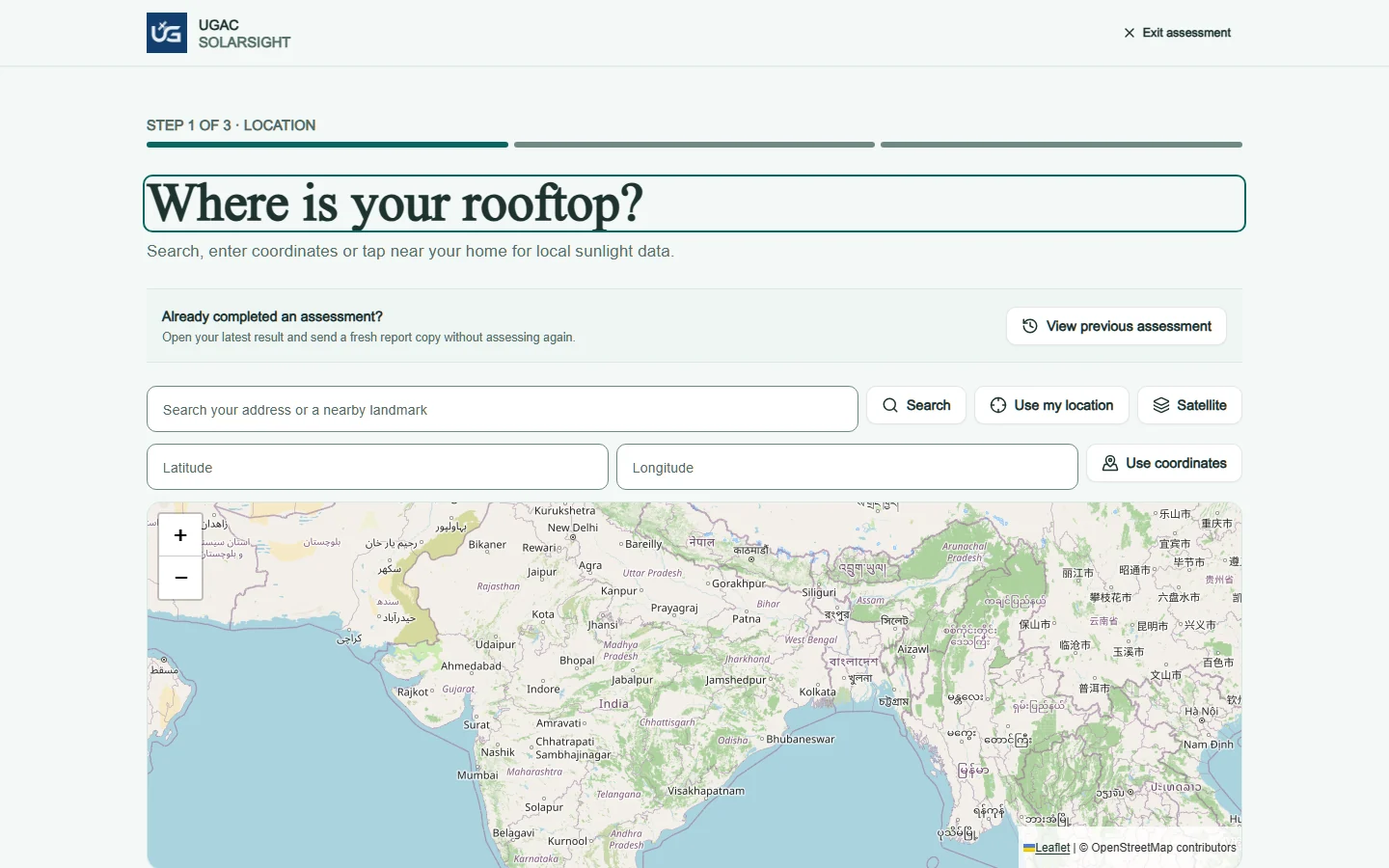
Your rooftop location
Search for the address or choose the rooftop on the assessment map.

SolarSight by UGAC
Explore rooftop solar generation and cost estimates using your location, roof details and electricity bill. Use the result to prepare for an installer discussion; final suitability and design need on-site checks.

Search for the address or choose the rooftop on the assessment map.
Have an approximate roof area, roof type, terrace access and shading information.
Use an average monthly bill to explore the estimated system size and financial scenario.
View the on-screen estimate before choosing whether to request an email report. Figures are estimates; subsidy approval, structural suitability and installation design need separate checks.
SolarSight is a rooftop solar assessment product of Uday GeoAnalytics Consultancy Private Limited (UGAC), based in Madhubani, Bihar, India. The product website is solarsight.in.
Use SolarSight to explore rooftop generation estimates and financial scenarios before discussing installation with an installer. A desktop assessment does not replace roof inspection, structural checks or the final installation design.
Neighbouring buildings, available roof space and the local solar resource shape the installation conversation. SolarSight brings location context into an initial assessment, while the physical roof still needs to be checked on site.


A useful estimate needs more than a point on the map. Roof details and installation assumptions help explain how a proposed system relates to the space available.
Share what you know about the roof and identify what an installer still needs to confirm. A desktop estimate cannot replace structural checks, roof inspection or the final installation design.
Generation and financial outputs depend on the dataset, system configuration and inputs used. The assessment should keep these assumptions visible so that an estimate can support a practical discussion.


Review the solar-data context, system size and losses behind the expected energy output.
Consider the tariff, installation costs and other assumptions used in savings and payback estimates.
Confirm applicable subsidy rules and requirements against current official information. An estimate does not confirm subsidy approval.
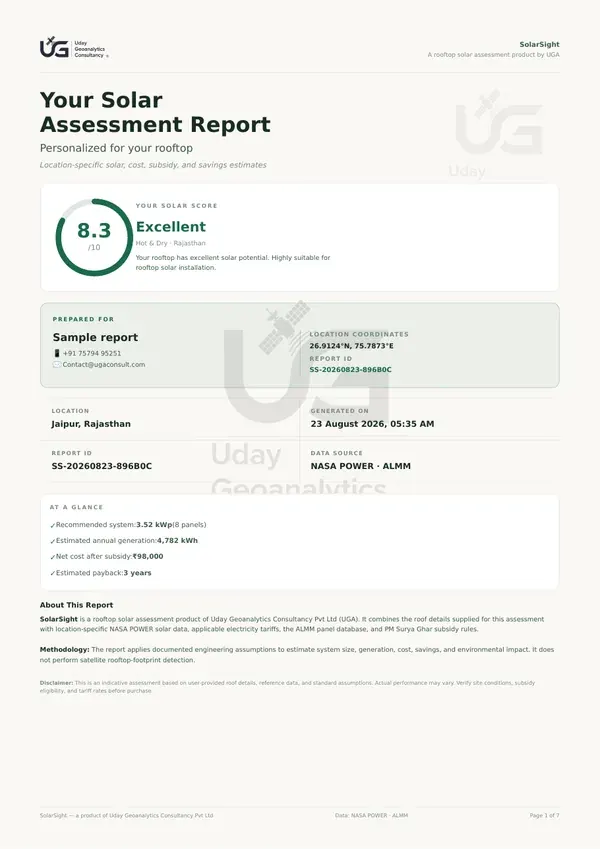
PM Surya Ghar official portalThe sample report shows how rooftop inputs, location context and estimated outcomes can be presented together for review.
The figures shown belong to this sample assessment. Your result depends on your own roof, location and inputs; they are not a promise of performance or savings.
View the sample report cover

Use the assessment to frame the questions you want answered: how much usable area is available, what size system is suitable and which assumptions change the expected output or costs.
An installer’s site inspection should address roof condition, structural suitability, shading, equipment layout and electrical requirements before an installation is agreed.
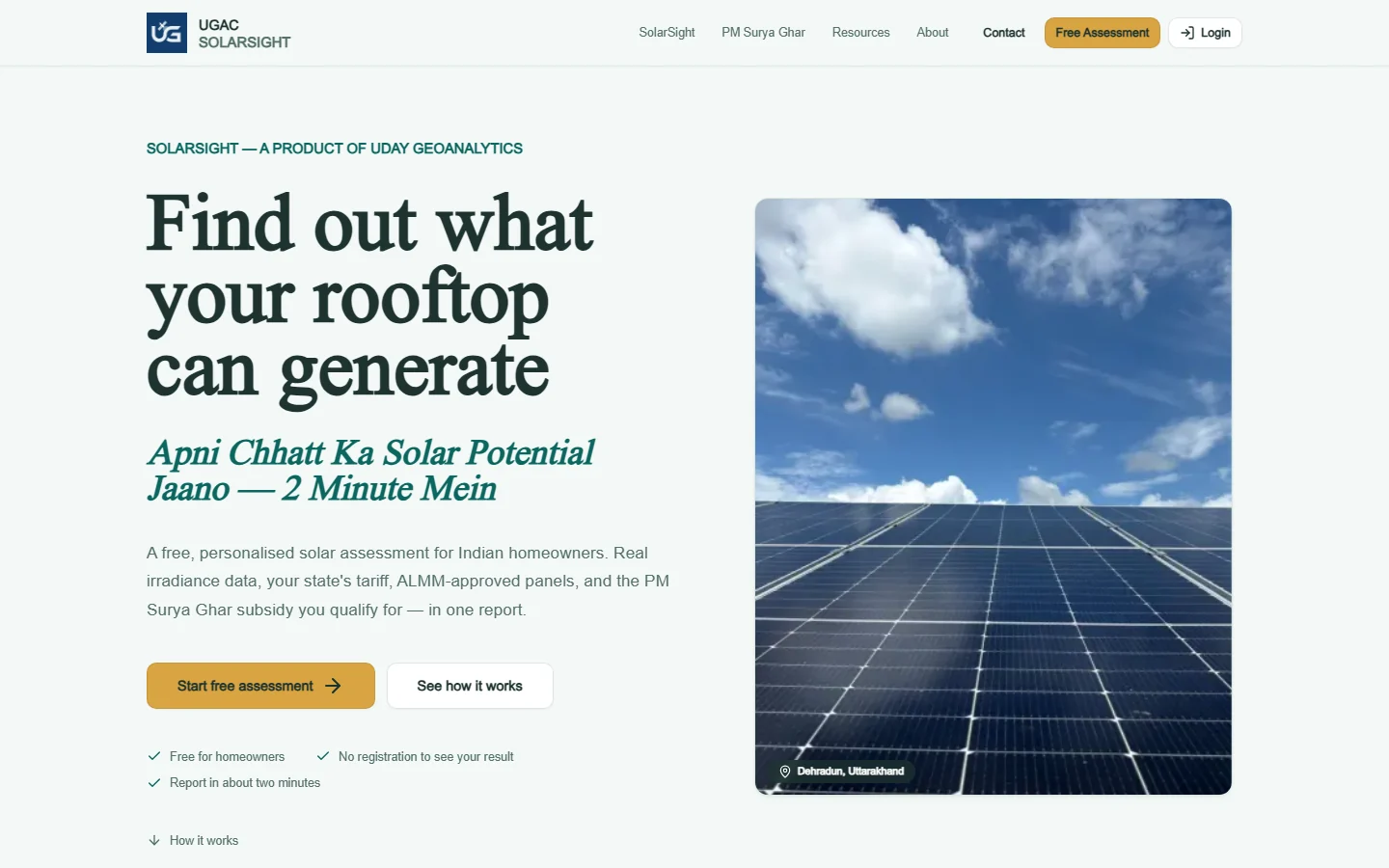
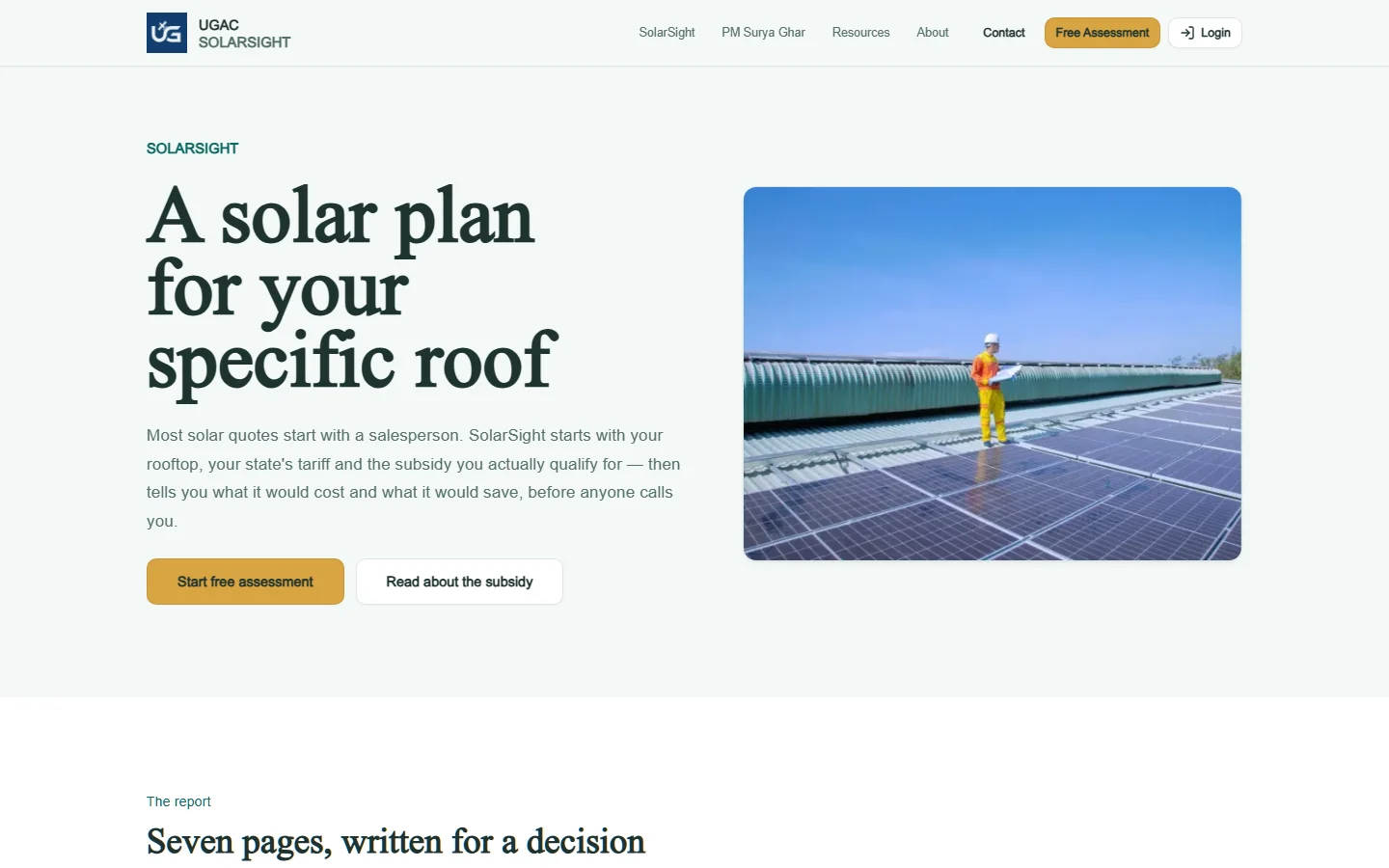
Discuss your rooftop assessmentOpen a preview to see the assessment journey, product information and supporting resources. These screenshots are snapshots; visit SolarSight for the current experience.
A product of UGAC
Start with the problem